Are we the good Samaritan? Or the robber? - illustrated by a homeless person sleeping on a bench in an alley full of graffiti while a young boy plays with his toys on the same bench.

Are we the good Samaritan? Or the robber?
We are one or the other

Are we the good Samaritan? Or the robber? We are all one or the other. There’s no saying that we’ve never been in the scenario Jesus painted. Because we’re in. Right now. Every. Single. one. of. us. Everyone! ...

Click to show/hide Bible Study Info

Are we the good Samaritan? Or the robber? is a reflective Bible study. Here’s a brief overview:
Reflective Nature: The page encourages readers to reflect on their own lives in the context of the Parable of the Good Samaritan, asking whether they are more like the Good Samaritan or the robber in their actions, especially in relation to the COVID-19 pandemic and its effects on homelessness.
Personal Application: It prompts personal introspection about one’s actions during the pandemic, such as wearing masks and social distancing, and how these actions relate to the broader societal issues like homelessness.
Biblical Analysis: The study includes a detailed analysis of the Parable of the Good Samaritan from the Bible, linking it to contemporary issues and urging readers to consider their role in society.
Societal Context: It discusses the impact of COVID-19 on employment and homelessness, challenging readers to consider their responsibility towards others in light of Christian teachings.
The study uses the biblical text to encourage deep personal reflection and application to modern-day life and social issues.

An old, run down church that's physically destroyed, but was ruined first because of the ways people in church destroy churches from the inside.

Ways people in church destroy churches from the inside

There was a series on crosswalk.com earlier this year. 10 Ways We May Be Destroying Our Churches. Of course, there are more than ten. So, I borrowed the thought and called my series Ways people in church destroy churches from the inside ...

Click to show/hide Bible Study Info

Ways people in church destroy churches from the inside has elements of three different Bible stydy types. As such, it doesn’t fit neatly in any one of them.Here’s a summary of the type of Bible study it represents:
Inductive Study: The page does not follow an inductive study approach, which typically involves observation, interpretation, and application directly from the text, without prior knowledge or assumptions.
Topical Study: It seems to be a topical study, as it discusses specific topics like the ways people in church can cause harm internally and references relevant Bible passages to explore these issues.
Reflective Study: The page includes reflective elements, encouraging readers to consider their own beliefs and actions in light of the biblical passages and concepts presented.
Application Study: There is an emphasis on application, as the page urges readers to live by the Spirit and avoid destructive behaviors within the church community, applying the teachings to real-life situations.
It addresses the serious nature of seemingly small sins like gossip and their impact on the church’s spiritual health.

Colored pencil sketch of Jesus speaking to a modern-day group on a hillside to show faith, love and trust in God, as written in the God versus religion: faith, love and trust in God web site.

God versus religion: faith, love and trust in God
Reflective Bible Study

I've been doing this for more than a dozen years now. And I've never actually written anything on what the site is about. It seemed obvious to me. And yet, I guess it really isn't obvious to everyone. Just like the Bible's not obvious to everyone. So now, here's God ...
Click to show/hide Bible Study Info

God versus religion: faith, love and trust in God is focused on reflective Bible study. Here are the key takeaways:
Reflective Approach: The author emphasizes a reflective study method, aiming to open up the meanings of God’s Word with additional information that most people may not have.
Contextual Understanding: It includes understanding the Bible’s context—written for a different time, people, and language—enhancing comprehension of the scriptures.
Stringing Pearls: The site uses a method called “stringing pearls,” referencing various verses together, trying to follow how Rabbis taught in the past.
God vs Religion: It explores the differences between personal beliefs and institutionalized religion.
The page’s goal is not to dictate beliefs but to facilitate deeper understanding and discussions about faith, love, and trust in God.

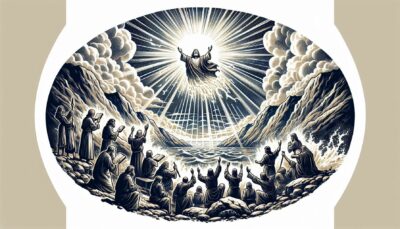
An image of God appearing over a crowd of people praying, to illustrate: Psalm 33 - The Lord is our help and our shield

Psalm 33 – The Lord is our help and our shield
But, to help us do what?

The Psalm says, “We wait in hope for the Lord, He is our help and our shield”. But what does that really mean? The Lord is our help and shield to do what, exactly? What’s the goal? And who/what are we shielded from? When you read the entire Psalm, it’s ...
Click to show/hide Bible Study Info

Overall, the Psalm 33 study incorporates elements of all of the following four types of study, making it a comprehensive approach to Bible study.
Inductive Study: The page includes a detailed examination of Psalm 33, encouraging readers to observe the text closely and draw conclusions from it.
Topical Study: The study focuses on specific themes such as worship, praise, and the attributes of God as our help and shield.
Reflective Study: It prompts reflection on the deeper meaning behind the Psalm and its relevance to the reader’s beliefs and understanding of God.
Application Study: The page encourages applying the insights gained from Psalm 33 to one’s life, emphasizing trust and worship of God.

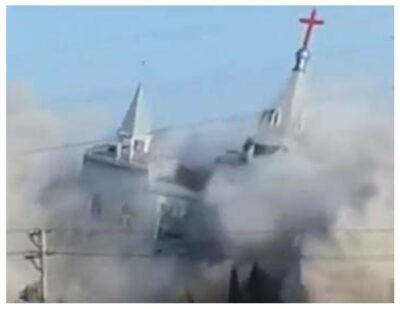
China bombed a megachurch in attempt to redefine Christianity

China bombed a megachurch in attempt to redefine Christianity
And it might affect you

Yes, you read that correctly. China bombed a megachurch. And the bombing was legal. It was part of their ongoing attempt to redefine Christianity and make it into a Communist China church that has nothing to do with Jesus ...

Small fishing boats double as church under penalty of death

Small fishing boats double as church under penalty of death
Do you love Jesus enough to do that?

Would you go to church in a boat? What about under penalty of death if you're caught? I wonder what I would do. What about you? Under what circumstances are we willing to attend any church under penalty of death? It's happening right now ...

When governments redefine Christianity, who do its follower pray to - illustrated by a man praying to a giant statue of a question mark.

Can China and U.S. governments define a new Christianity?

Who gets to define religion? In our case, specifically, who gets to define the new Christianity? China passed a set of religious regulations about six years ago. I started to write about them a couple of times. It was never quite right though. I felt like the U.S., in some ...

Why do rich people give their money away?

Why do rich people give money away?

Why do rich people give money away? No, they don't all do that. But some do. And they get cheered for it. But do you ever wonder, why do they give it away? And should we be cheering? ...

A scene with many paths to begin to answer the question - How come so many Christians don’t really know God?

How come so many Christians don’t really know God?

It seems like a weird, even dumb, question. How come so many Christians don’t really know God? It's a very important question with a very disturbing answer. It's all too easy for Christians to not know God! The headline shocked me. 51% of Churchgoers Don’t Know of the Great Commission, ...

Click to show/hide Bible Study Info

How come so many Christians don’t really know God? is a Reflective Bible Study. Here’s a brief summary:
Reflective Nature: The page encourages introspection and self-examination among Christians regarding their understanding and commitment to God’s teachings.
Spiritual Journey: It uses the metaphor of a forest with various paths to represent the spiritual journey and the importance of choosing the right path with the guidance of the Holy Spirit.
Great Commission: It discusses the alarming statistic that many Christians are unaware of the Great Commission, emphasizing a gap in knowledge and practice of Jesus’ teachings.
True Belief: The page stresses the difference between mere belief and a life-transforming commitment to follow Jesus’ teachings, which is essential for truly knowing God.

people holding "I want less signs" to represent the question: why do we settle for less when we could have more?

Why do we settle for less when we could have more?
Including / especially Christians

I thought our theme for life was "I want it, I want it all, and I want it now". So why do we settle for so much less than what we could have? Maybe the most surprising thing is that I am talking about Christians ...
Scroll to Top